(First half of the year here.)
I read or listened to most of these books by borrowing the digital copies or digital audio-books from my library. I would recommend you do the same thing. I would also suggest looking to see if you can sign up for local county or for nearby cities’ library cards. Despite not living in a nearby city, I was able to register for a library card; they have a vast selection of content compared to my local library system. While each book cover here links to an affiliate Amazon page, you can also sometimes find the same physical copy of the book you are looking for on Better World Books or Thriftbooks.
The Marching Morons - C. M. Kornbluth
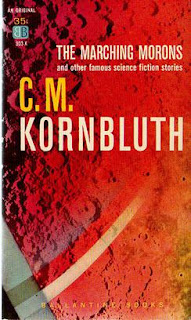
Short story by C. M. Kornbluth. It’s hard to tell if this book was a satire or an actual argument to try to justify eugenics. The way that this idea is unfolded in the story made me think the author was a eugenicist until the rest of the story peels that back a bit. The book could make an interesting discussion for a course on utopias and dystopias. Otherwise Kurt Vonnegut’s quote “we are what we pretend to be” comes to mind along with the fact that a lot of early pulp science fiction can turn out to be complicated.
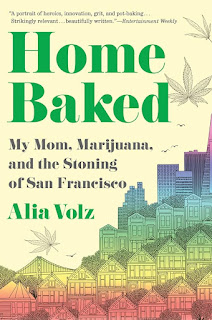
Home Baked: My Mom, Marijuana, and The Stoning of San Francisco - Alia Volz
A mix being a tour de force of the history of San Francisco and a personal memoir of being raised by hippies from the sixties through the early eighties: told through the perspective of the daughter of the woman who ran Sticky Fingers Brownies in San Francisco. I first heard about this book when the author gave a talk at one of my local libraries.
I would say that there probably is not a lot of new things here in this book for you if you’ve previously read or studied the history of San Francisco or marijuana in the US. The biggest takeaway from this book for me is the quote “San Francisco is a city of mass migrations and collapse”. The author of the book does that
thing people in the Bay Area do where they’ll acknowledge that we’re on stolen Ohlone land, and then kind of complain about transplants; she says that she “sees techies as an invading force to colonize and pillage”, all the while she acknowledges that her parents were gentrifying San Francisco.
The author kind of also leans into entertaining the idea that certain characters in the book might be psychic. I dunno man... I was taught to never trust a hippy.
Here is a doctor in 1967 basically describing hippies as being incredibly passive aggressive people.
Capitalist Realism: Is There No Alternative? - Mark Fisher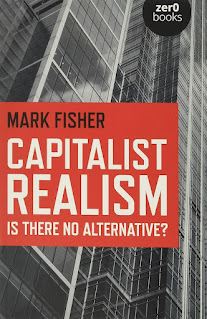
When I started this book it felt like a philosophy book written by a Redditor with its references to V For Vendetta, Children of Men, and Fight Club; as I continued reading to book I found myself agreeing with it wholeheartedly, take that as you will. Capitalist realism is "loosely defined as the predominant conception that capitalism is the only viable economic system" - which I’m pretty sure makes the book an investigation of the Zizek quote "it is easier to imagine an end to the world than an end to capitalism". At times the book can come off as wordy and pretentious, at one point the author makes an obscure reference to the film Videodrome that would leave the reader lost had they never seen the film. Capitalist Realism reminds me of an assigned reading I would get for a philosophy class where we would have a compelling class discussion about the book for one day and then we’d never discuss it again. It also reminds me of something that the hosts of the podcast Chapo Traphouse would love. Sure enough while I was reading this book, they did a segment on the book. Small world.
Scenes From The Real World - Harlan Ellsion
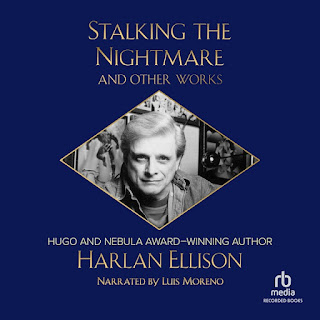
Harlan Ellison was a science fiction writer that was revered for his writing, but loathed for his personality.
This video gives a good impression of the vibe Ellison gave off. In hindsight, I'm not really sure who should be reading Ellison. Maybe he's for misanthropes who are tired of being misanthropes and are hoping that holding a mirror up to themselves will help them.
The
Scenes From The Real World stories come from a collection of short stories called
Stalking the Nightmare. I didn’t read the short stories in the book because I don’t want to read any further from the guy that wrote
I Have No Mouth And Must Scream and who also vocally resented his audience. Instead I wanted to read about supposed real life experiences from someone difficult like Ellison.
The first story starts with about how his most interesting sexual experience was tying up a woman naked in her living room, leaving her to be found by her mother. I used the cover of the audio book for this one so that you have to look at his face on its cover as you read that. He puts the story first because he thinks that sex is what it takes to get the audience’s attention, but since Ellison has basically expressed contempt for his readers in the past, it’s more clear the story’s intention is to let you know that Ellison very much wants
you to know that he can get laid if he wants to. The second story in this chapter gets into how he once got into an altercation with some men who this time he very much want to let you know are black - it comes off with the same “try-hardness” of the first story to say the least. Ellison
was known for kicking the asses people in general, so he's probably not making this story up. Again, take that as you will.
The second chapter is about how he was fired from his job at Disney on the first day for making rude Disney jokes in front of Roy Disney. This story is worth reading. The third story is about a NASA press conference on Saturn. The fourth story is about dealing with the politics of being a writer in Hollywood, this story is also worth reading and reminds me of certain episodes of The Critic. The last story is about his experience on the road as a carny. Also worth reading.
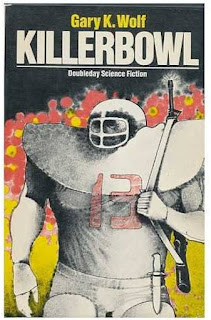
Killerbowl - Gary K. Wolf
Picked this up because I saw it in the author bibliography of
Who Censored Rodger Rabbit, and thought it looked interesting. This book is a good read for someone who thought that the 1975 movie
Rollerball was an interesting concept but poorly executed. Had this book come out before the short story
Rollerball was based off, of rather than two years after, I imagine the movie rights for this book would have been picked up instead. In fact, some covers advertise that this book is “Deadlier than ROLLERBALL!” It’s pulp paperback science fiction from the 70s. I kept thinking that the author of this book was the author of
Of Mice And Men.
I was annoyed by a plot point in the book. Incriminating evidence that is on tape is destroyed. No one thought to make backups. I guess in the 1970s data redundancy was not something many people talked about.
Franchise: The Golden Arches in Black America - Marcia Chatelain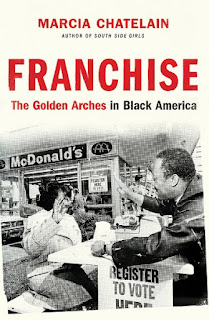
In the 1988 Eddie Murphy film Coming To America, John Amos plays a franchise owner of a knockoff McDonalds restaurant. At one point of the book, Franchise paints Amos’ character as a sort of snap shot into the zeitgeist and history of black McDonalds franchise owners, The book chronicles this history strating with McDonalds relying on black franchisees to grow their brand in black communities in Chicago up today.
One of the repeating themes in the book is that the term “black-owned” obscures the systems that keep money outside of black communities, and is a problem that capitalism itself cannot fix. Reading this book was like learning about another level of American class history that I never knew about, akin to reading about how police would lie in wait to beat union workers and steal their money after they had cashed their paychecks in The Riders Come Out At Night.
Mouse Tales: A behind The Ears Look At DisneyLand - David Koenig
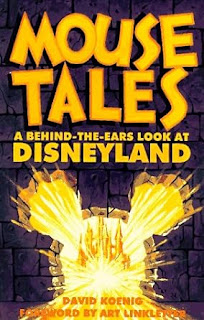
This book, published in 1994, is a little dated now. If Disneyland is a topic you’re interested in, you’re better off listening to / watching
Kevin Perjurer’s Youtube channel Defunctland; which probably borrows from this book, but definitely borrows from more established Disney History books when doing research. The book starts as a history of Disneyland (which is better covered by Perjurer’s Defunctland) and then goes into a series of uncited stories from employees working at the park. The stories are broken up into chapters such as Cast, Rides, Injuries, Lawsuits, etc. I think I most enjoyed all the ways Disney cast members would play pranks in the park, and learning about the politics around going to court against Disney in the jurisdiction in which it is a major employer.
The Metamorphosis - Franz Kafka
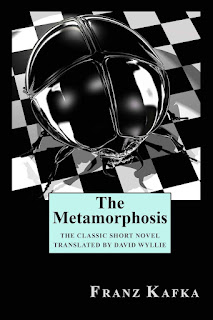
I’m not in a place to write anything about
The Metamorphosis which is new, compelling, or interesting. I picked up a book of Kafka’s stories because in the linear notes on Frank Zappa’s album
We’re Only in it For The Money, the track
The Chrome Plated Megaphone Of Destiny says to read Kafka's short story
In The Penal Colony before listening to the track. The track ends up being an avant garde interpretation or approximation of the short story. The short story also has a provocative ending that resonates probably even more today than it did when the short story was written in 1914.
Jesus and John Wayne - Kristin Kobes Du Mez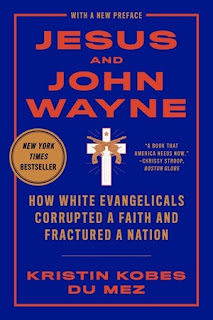
Jesus and John Wayne is an admittedly dry history of evangelicalism in the United States and how evangelical leaders slowly culturally aligned their version of Jesus and the gospel with “traditional” gender roles. I put traditional in quotation marks because the book details how evangelicals came to define traditional. Like I said about The Riders Come Out At Night earlier this year, If you’re an American or have been following American politics closely, you can probably drop off of the book from where you ended up starting in real life and skip the last few chapters. You’re probably already an expert on the subject.
NOFX: The Hepatitis Bathtub and Other Stories - NOFX and Jeff Alulis
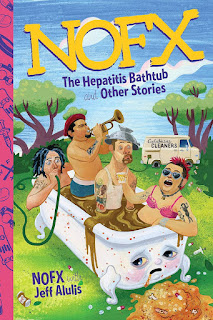
Initially all I was going to write for this was: “The first sentence of this book is ‘The first time I drank piss was on the fire escape overlooking downtown Los Angeles.’ ten out of ten, buy this as a stocking suffer for someone you love... or someone you hate”. But after the first chapter, which was probably put there to pull you in with shock value, you find it’s not needed because the book gets dark, personal, and profoundly fucked up real quick. There’s frankly... some messed up stuff in here, with that being said, this book is very good. The way that the book is edited demonstrates that some of the personal stuff band members share is the first time they’ve shared some of this stuff with the other guys. It kinda feels like church confession at times.
I was able to get an audio book copy from the San Francisco Library after it had been on loan for months. The audio book is the way to go here, the chapters are read by the band members themselves, and the two early ex-band members of the band’s chapters are read by Tommy Chong and Jello Biafra, both excellent orators. In a similar vein that’s worth mentioning,
The Dirt - which is a band autobiography on Mötley Crüe is also an incredibly interesting book about a group of messed up people, each chapter told from the point of view of one of the members. Books like these really go to show ways in which life can be completely awful.
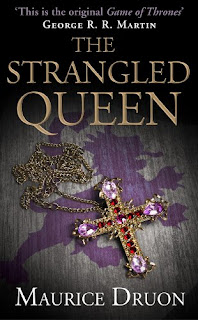
Strangled Queen - Maurice Druon
This is
the second book in the French
Accursed Kings series. As the cover above says, this series inspired George Martin to write his book series. I read the first book after trying to get my
Song of Ice and Fire fix after having finished the books that have been released sometime in the mid-teens. These books are historical fiction based around French kings in the 14th century. The books are about 200 pages each, so they're not as in depth as the
ASOIAF books, as a result they kind of feel like
Game of Thrones-lite, but that's not fair because these books came first. The first book has better plots and characters than the second book. It's pretty apparent what's going to happen in this book, given the title, especially after you finish the first book. Maybe French people already know everything that their monarchs got up to.